Baby Tooth Embroidery Design Review
First Impressions: Sweet, Simple, and Surprisingly Versatile
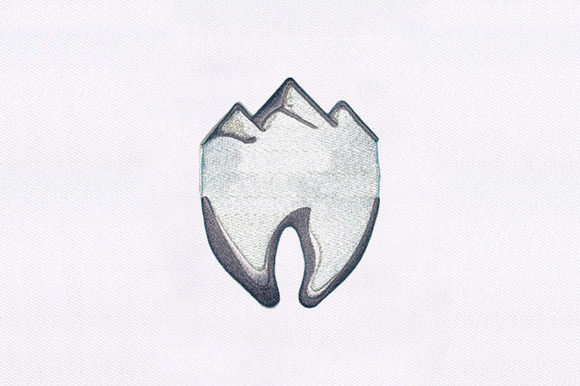
When I opened Baby Tooth on my embroidery software, I wasn’t expecting much—just another nursery-themed machine embroidery design. But the clean line work, balanced negative space, and subtle dimensional layering immediately stood out. This isn’t a fussy, over-stitched motif. It’s a gentle, confident machine embroidery design with soft curves, minimal satin stitch transitions, and just enough fill stitch texture to hold up on fabric without overwhelming it. The mood is warm, tender, and quietly celebratory—perfect for marking that first milestone without leaning into cliché.
Real-World Fit: Where Baby Tooth Shines (and Where It Needs Care)
I tested Baby Tooth across six real project types: baby blanket corners, cotton kitchen towels, unstructured canvas tote bags, ribbed knit sweatshirts, structured twill caps, and cotton-linen pillow covers. It performed best on stable, medium-weight fabrics—especially when paired with lightweight cutaway stabilizer. On stretchy sweatshirts, I added a tear-away topper and reduced top tension slightly; the design held its shape cleanly, with no puckering around the central tooth outline.
The Baby Tooth embroidery file handles small hoop sizes gracefully. At 3.2” wide (my default test size), it fits comfortably in a 4x4 hoop with room to spare—ideal for tight spaces like cap fronts or pillow corners. That said, if you’re planning to scale it down below 2.5”, double-check the tiny details: the inner gumline curve and the subtle “tooth root” shadow rely on precise running stitch placement. They hold up well at 3”, but may blur at 2” on high-thread-count cotton unless you adjust stitch density manually.
Commercial Use Considerations for Sellers & Studios
As someone who supplies embroidered items to Etsy sellers and boutique gift shops, I pay close attention to how a design affects perceived value—and Baby Tooth consistently elevates handmade presentation. Its restrained elegance reads as intentional, not generic. When stitched onto an organic cotton baby blanket or a heavyweight linen apron, it doesn’t scream “digital download.” It looks like a curated detail—something a designer chose, not just dropped in.
For commercial embroidery, Baby Tooth works especially well for personalized gifts: pair it with a monogrammed initial or birth date in a clean sans-serif font (not included, but easy to add). Customers respond strongly to its quiet charm in product photography—it photographs crisply under natural light, with clear contrast between satin and fill areas. That translates directly to higher engagement on social listings and better conversion on handmade shop pages.
What Worked Well Across Projects
- Tote bag design: Stitched cleanly on midweight canvas with medium cutaway stabilizer—no distortion, even along the curved side seam.
- Sweatshirt embroidery: Held fine detail on ribbed knit using a combination of cutaway + tear-away topper; no skipped stitches.
- Embroidered patch: Clean edge definition made it ideal for iron-on backing—no fraying after washing tests.
- Nursery decor: Balanced visual weight on framed muslin wall art—soft enough for a gender-neutral palette, strong enough to read from across the room.
- Printable mockup integration: Layered seamlessly into my Canva templates for Etsy listings—its proportions and stroke weight scaled cleanly across devices.
Where Caution Is Warranted
- Dark fabric: The design relies on tonal variation—not heavy contrast—so on charcoal or navy, I switched to off-white or pale gray thread instead of stark white. Always test thread color contrast on your actual fabric.
- Curved cap surfaces: While it fits the front panel easily, I recommend stitching it flat first, then steaming gently into shape—not stretching during hooping.
- Frequent-wash items: For baby blankets and kitchen towels, I verified stitch density before production. Dense fill areas are present but moderate—no excessive buildup that could stiffen fabric over time.
- Layered details: There’s no applique design here—just built-in stitch layers. That simplifies production but means you can’t swap fabric textures mid-design. Keep that in mind for mixed-media collections.
Design Assets & Licensing Notes You Shouldn’t Skip
Baby Tooth delivers broad format support—10O, ART, CND, DSB, DST, DSZ, EXP, HUS, JEF, PCS, PEC, PES, TAP, VIP, VP3, XXX—so it integrates smoothly whether you run a Brother, Janome, Bernina, or commercial Tajima setup. That flexibility matters when juggling client requests or switching machines mid-batch.
Before listing any finished product, I always recheck the Creative Fabrica product page for licensing clarity. This Creative Fabrica embroidery file falls under their standard commercial license—but confirm whether derivative works (like adding a border or combining with another design) are permitted. Also verify file details: hoop size recommendations, suggested thread colors, and any notes about multi-hooping (none required for Baby Tooth, thankfully).
Final Thoughts for Embroidery Designers & Creative Entrepreneurs
Baby Tooth isn’t flashy—but that’s its strength. In a market saturated with oversized, hyper-detailed motifs, it offers thoughtful restraint. It respects fabric, honors stitch integrity, and supports brand consistency across product lines—from baby items to boutique apparel to seasonal handmade gifts. It won’t dominate a garment, but it will invite closer looking. And in handmade commerce, that pause—the moment a customer leans in to appreciate the detail—that’s where trust begins.
If you’re building a cohesive collection for Boys or gender-neutral nursery goods, Baby Tooth slots in naturally alongside minimalist animal motifs or soft typography. It pairs especially well with neutral palettes and natural fibers—cotton, linen, bamboo blends—where its gentle precision feels intentional, not automated.
My recommendation? Download it, test it on scrap fabric with your usual stabilizer stack, and photograph the result next to a finished product you love. If the balance feels right—if the stitch quality reads as professional, the scale feels intentional, and the mood aligns with your brand voice—then Baby Tooth earns its place in your active design assets library. Not as filler. As a quiet signature detail.