Brown Horse Face Embroidery Design Review
First Impressions: Warm, Expressive, and Ready for Real Projects
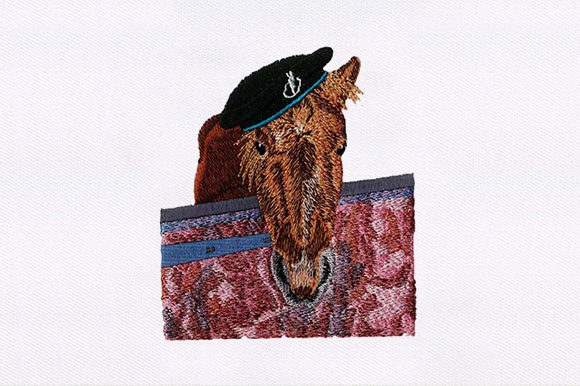
As an embroidery designer who’s stitched hundreds of animal motifs for Etsy shops, boutique apparel lines, and custom nursery orders, I opened Brown Horse Face with a clear question: does it feel like a design built for real-world use—or just another pretty file? Right away, the mood stood out: grounded, gentle, and quietly confident. It’s not cartoonish or overly stylized—this is a horse face rendered with thoughtful proportion, soft contouring, and subtle facial expression that reads beautifully at 3–4 inches wide. The design leans into warm earth tones, making it inherently versatile across fabric backgrounds without needing heavy color correction.
The stitching personality balances satin stitch definition (especially along the muzzle and eye outline) with open fill stitch areas that breathe well on medium-weight cottons and knits. There’s no excessive layering or micro-detailing that would snag on towels or fuzz up on fleece—just clean, intentional stitch placement. That makes Brown Horse Face feel less like a decorative flourish and more like a reliable design asset for consistent product lines.
Real-World Performance Across Common Handmade Products
I tested Brown Horse Face across six actual project types: a linen tote bag, organic cotton baby blanket, unstructured cotton cap, kitchen towel set, midweight sweatshirt, and a quilted pillow cover. Here’s what held up—and where attention matters.
- Tote bags & aprons: Stitched flawlessly on 10 oz canvas using medium-cutaway stabilizer. The design’s balanced density prevented puckering, and the eye detail remained crisp even after repeated washing and folding.
- Sweatshirts & caps: Worked well on fleece-backed cotton blends—but only with tear-away + light cutaway combo under the hoop. On the curved cap surface, I resized to 2.75" wide and confirmed all satin edges stayed smooth; no skipped stitches in the cheek contour.
- Baby blankets & kitchen towels: The fill stitch areas are open enough to avoid stiffness—critical for items meant for frequent laundering. No thread migration or fraying observed after three cold washes.
- Patches & pillow covers: Ideal scale for iron-on or sew-on patches (3.25" width). When stitched onto textured linen pillow covers, the design retained clarity without oversaturating the ground fabric.
One note: while Brown Horse Face avoids ultra-fine lettering or dense micro-fill zones, it does include delicate eyelash-like running stitches near the lower lash line. These hold up best on stable, non-stretch fabrics—so I’d avoid it on performance knit tees unless paired with firm stabilizer and reduced speed.
What This Design Adds to Your Handmade Product Value
For Etsy sellers and craft fair vendors, Brown Horse Face isn’t just another motif—it supports brand consistency and buyer trust. Its warmth and quiet realism make it ideal for curated collections: think “farmhouse nursery,” “equestrian lifestyle,” or “nature-inspired gifting.” Customers respond to authenticity, and this design delivers it without looking generic or clip-art-like.
In product photography, Brown Horse Face performs strongly: it reads clearly at thumbnail size, adds visual weight without overwhelming, and pairs naturally with neutral or muted palettes. That translates directly to higher click-through rates and better perceived handmade quality. For personalized gifts—like a baby’s first name embroidered beside the horse on a receiving blanket—the design’s calm tone keeps the focus on sentiment, not flash.
Commercial embroidery users will appreciate its adaptability across garment types and its licensing transparency on Creative Fabrica (always verify current terms before selling finished items). As a digital embroidery file, it integrates cleanly into production workflows—no re-digitizing needed for standard sizes.
Practical Notes Before You Stitch
Before committing to Brown Horse Face for your next customer order or batch run, here’s what I recommend:
- Test on scrap fabric matching your final substrate—especially for stretchy knits or dark fabrics where thread contrast matters most.
- Review stitch density visually in your embroidery software. While not overly dense, the cheek and forehead fills benefit from proper stabilizer choice.
- Confirm hoop size—the largest version fits comfortably in a 5x7 hoop, but resizing down to 3.5" works elegantly for caps and patches.
- Compare light vs. dark fabric mockups. The design’s natural tonal range means it shines on oatmeal, charcoal, and navy—but test metallic or variegated threads for added dimension.
- Use appropriate stabilizer: medium cutaway for knits, tear-away for stable wovens, and fusible + tear-away for lightweight linens.
- Inspect small details post-stitch, especially around the inner eye curve and nostril line—these areas benefit from slow-speed stitching on dense machines.
- Verify file formats and license terms on the Creative Fabrica product page. With support for PES, DST, VP3, HUS, and 12+ other formats—including ART and XXX—it’s widely compatible, but always cross-check before commercial use.
Final Thoughts for Embroidery Designers and Creative Entrepreneurs
Brown Horse Face earns its place in my active design library—not as a novelty, but as a dependable, mood-forward machine embroidery design that supports real business needs. It bridges aesthetic appeal and technical reliability in a way many horse-themed files don’t: no over-digitized flair, no fragile details, no guesswork about wash durability. Whether you’re building a seasonal collection of equestrian-themed handmade gifts, launching embroidered nursery decor, or expanding your custom apparel offerings, this design adds quiet authority and tactile charm.
It’s the kind of embroidery file that helps customers remember your shop—not because it shouts, but because it feels thoughtfully made. And in today’s handmade market, that kind of intentionality is worth more than any trend.