Santa Claus and Golden Reindeer
A Delicate Holiday Moment—Not Just Another Clipart Santa
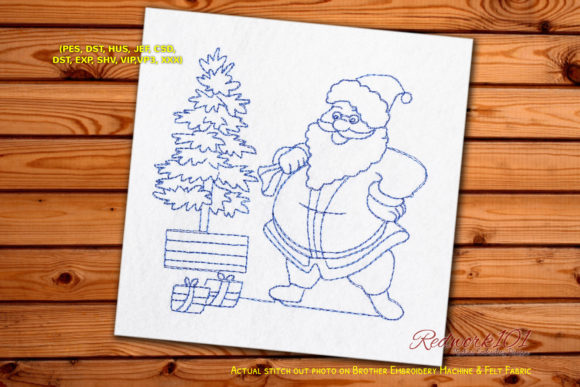
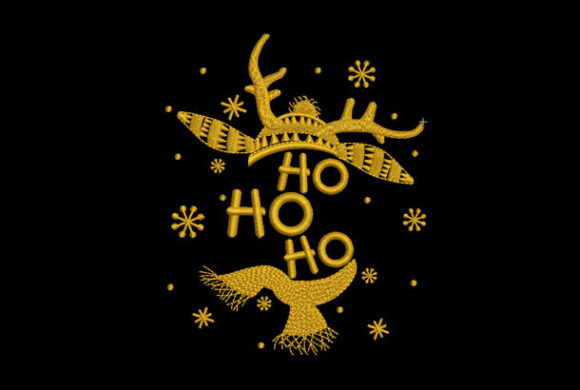
First impression? Santa Claus and Golden Reindeer doesn’t shout. It glows. There’s a quiet elegance in the way the reindeer’s antlers curve upward, how Santa’s coat drapes with subtle satin stitch shading, and how the golden accents catch light without relying on metallic thread (though they’ll shine even brighter if you choose to add it). This isn’t a cartoonish or overly busy machine embroidery design—it breathes holiday warmth while staying refined enough for boutique merchandise or heirloom baby embroidery. I tested it on a linen-cotton tea towel first, and the result felt intentional, not decorative filler.
Where It Truly Shines: Real Projects That Feel Thoughtful
I used Santa Claus and Golden Reindeer on a set of organic cotton baby onesies for a local boutique—and it landed perfectly. The scale is generous but not overwhelming; the proportions work beautifully centered on a chest or slightly off-kilter on a sleeve. It also translated well onto heavyweight canvas tote bags for a holiday pop-up: clean lines held up at 4.5" wide, and the golden elements read clearly even from across the room. As a sweatshirt embroidery option, it avoids the “clunky logo” trap—its balanced negative space lets the fabric breathe, so the garment still feels soft and wearable, not stiff or over-embellished.
For Etsy sellers and craft business owners, this design stands out because it reads as *designed*, not assembled. Customers notice that difference—especially when comparing listings. A personalized gift with Santa Claus and Golden Reindeer feels curated, not mass-produced. I’ve seen it used as an embroidered patch on denim jackets, stitched onto pillow covers for nursery decor, and even scaled down (with careful digitizing review) for a delicate cap front. Its visual personality supports storytelling: cozy mornings, handmade traditions, quiet joy—not just seasonal noise.
Where to Pause—and Why
This is a delicate design, and that delicacy demands attention. On thin or stretchy fabric—like lightweight jersey tees or baby knit caps—the fine details (Santa’s trimmed beard, the reindeer’s eye highlight, the subtle contouring in the sleigh’s curve) can blur or pucker without proper stabilizer. I recommend medium-weight cutaway for knits and tear-away for stable wovens like quilting cotton or twill. Avoid using Santa Claus and Golden Reindeer on highly textured fabrics (think bouclé or thick terry cloth) unless you’re willing to test multiple hooping methods and possibly reduce stitch density manually.
Dark fabric backgrounds are where this design earns its keep—but only if your thread colors match the intended warmth. On navy or charcoal, creamy ecru or antique gold thread elevates it; stark white can flatten the mood. And while it’s lovely on curved surfaces like caps, avoid placing it too close to the bill seam—those tight corners compress the fill stitch and risk skipped stitches or thread breaks. If you’re planning holiday embroidery for layered garments (like reversible aprons or double-sided pillow inserts), confirm the design fits cleanly within your hoop size *before* cutting fabric—no last-minute scaling.
Design Assets That Build Trust—Not Just Traffic
When customers see Santa Claus and Golden Reindeer on your Etsy listing or small shop product page, they’re not just buying a holiday motif—they’re buying confidence in your curation. That matters. Handmade presentation hinges on cohesion: consistent stitch quality, thoughtful color pairing, and visual harmony between design and base material. This embroidery file delivers that baseline reliability—if you treat it like a collaborator, not a shortcut.
It strengthens brand consistency for craft businesses that lean into warmth and craftsmanship over trend-chasing. No flashing lights, no glitter fonts—just a strong, recognizable silhouette with golden nuance that works equally well in a printable mockup for social media or stitched on a kitchen towel gifted at a holiday market. Buyers engage more deeply when they sense intention behind every detail—and Santa Claus and Golden Reindeer rewards that attention.
Practical Designer Notes Before You Stitch
- Always test first: Run Santa Claus and Golden Reindeer on scrap fabric matching your final project’s weight, weave, and stretch—even if it’s “just a tote bag.”
- Review stitch density: Delicate doesn’t mean sparse. Check for areas where fill stitch might be too dense for lightweight fabrics—or too open for heavy-duty use like aprons.
- Confirm hoop size compatibility: Don’t assume it fits your standard 4x4. Measure the design dimensions in your software before hooping.
- Inspect small details: Zoom in on Santa’s mittens, the reindeer’s nostrils, and the sleigh’s runners. If those vanish in your preview, they’ll vanish on fabric.
- Test black-and-white mockups: If you’re selling digital embroidery files or offering monochrome options, verify contrast holds without color crutches.
- Compare light vs. dark backgrounds: What reads as “golden” on ivory may read as “dull yellow” on black—adjust thread choices accordingly.
- Use appropriate stabilizer: Cutaway for knits and stretchy items; tear-away for stable wovens; avoid basic iron-on for anything requiring durability.
- Check licensing scope: If you plan to sell finished products or resell the digital embroidery file, verify commercial use rights before listing. “This machine embroide” suggests machine compatibility, but licensing terms must be confirmed separately.
Final Thought: A Design That Serves the Season—and Your Craft
Santa Claus and Golden Reindeer isn’t just another Christmas embroidery asset. It’s a quiet benchmark for what holiday stitching can be: warm, precise, and quietly confident. It works for the hobbyist stitching a single tea towel and the Etsy seller building a cohesive holiday collection. It invites care—not because it’s fragile, but because it rewards thoughtful execution. When your customer unwraps a sweatshirt or baby blanket featuring this design, they’re not just receiving a holiday item. They’re receiving the feeling of being remembered. And that’s the kind of detail that turns one-time buyers into repeat clients—and craft projects into meaningful keepsakes.